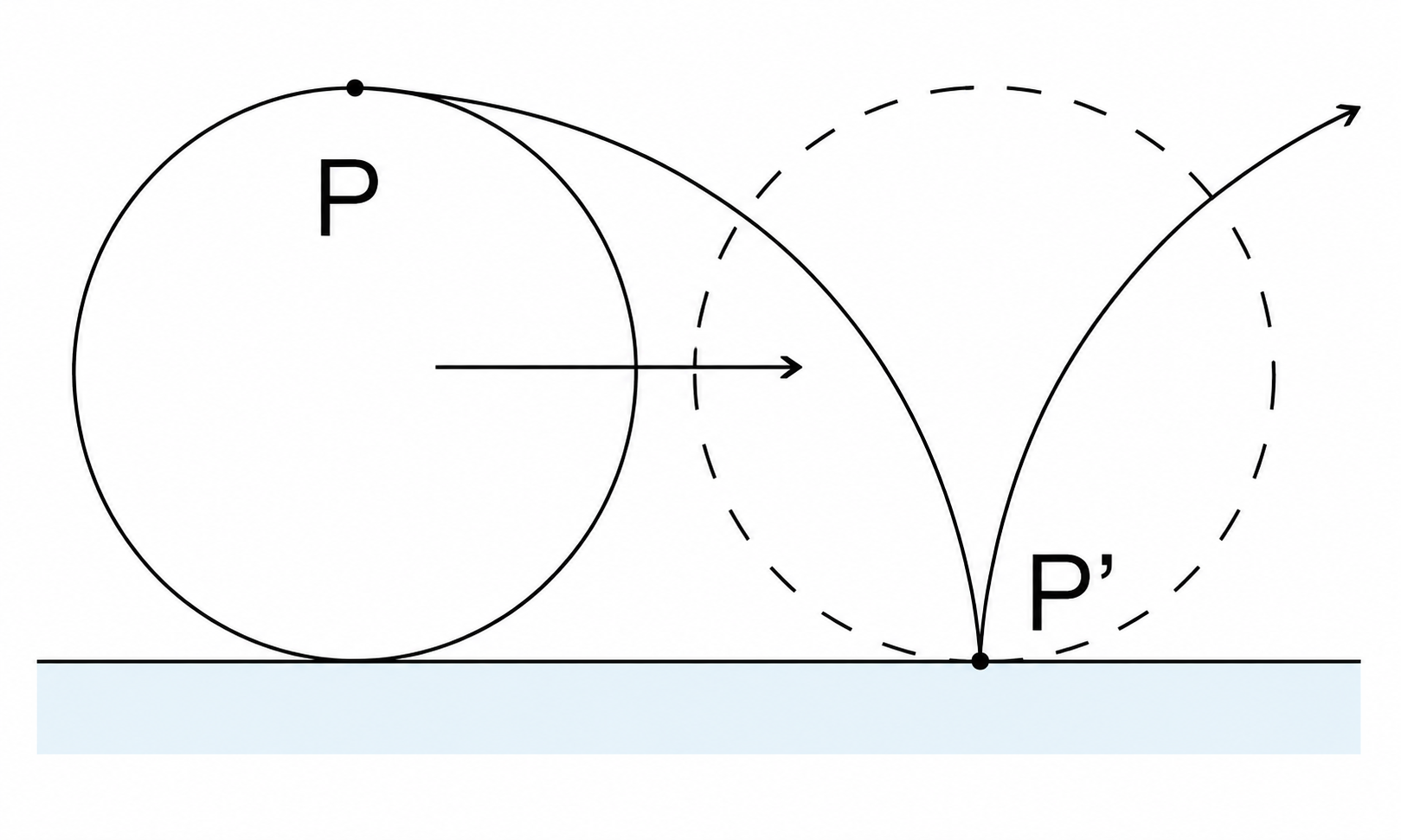
Generating the cycloidal curve
A rolling circle creates a cycloidal path.



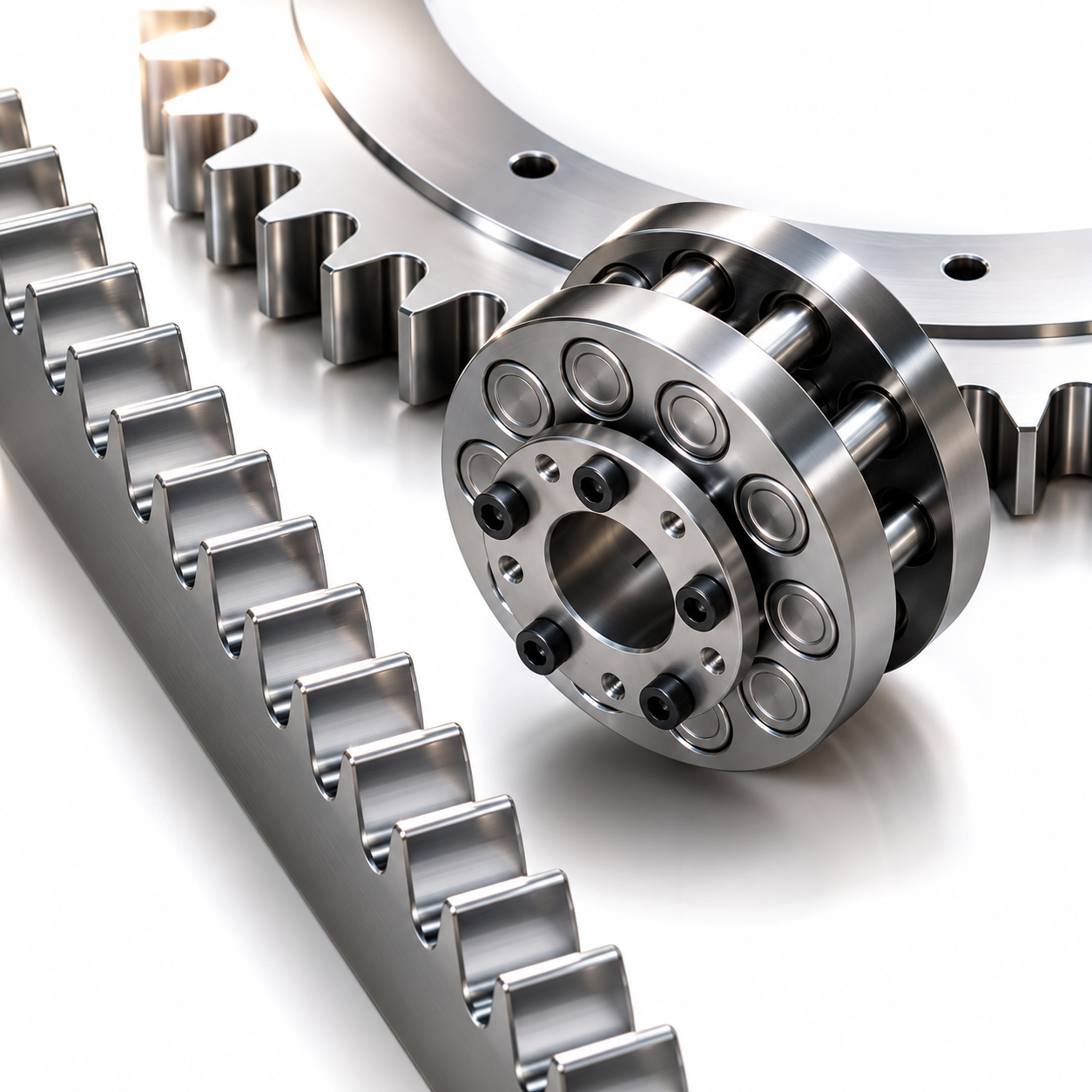
Combining a cam ring gear with a cycloidal tooth profile and a roller pinion enables backlash-free, high-precision positioning and light, smooth rotary transmission.
The rotary-to-rotary cam ring gear and roller pinion can meet new design requirements. A cam ring gear with a large internal diameter is well suited to unitized designs with a hollow structure.
A rack-and-pinion drive combines a small-diameter circular gear, the pinion, with a rack whose teeth are machined along a long flat bar, converting rotational force into linear motion. Applying rotational force to the pinion moves the rack horizontally to the end of the travel defined by its toothed section.
Conventional racks and pinions normally use involute teeth, so the backlash required for proper meshing is allowed for during design. However, backlash causes stopping-position errors and should be avoided as far as possible in precision-machine design.
Backlash also causes noise and vibration as the teeth engage. Sliding contact between the meshing tooth surfaces can lead to premature wear.
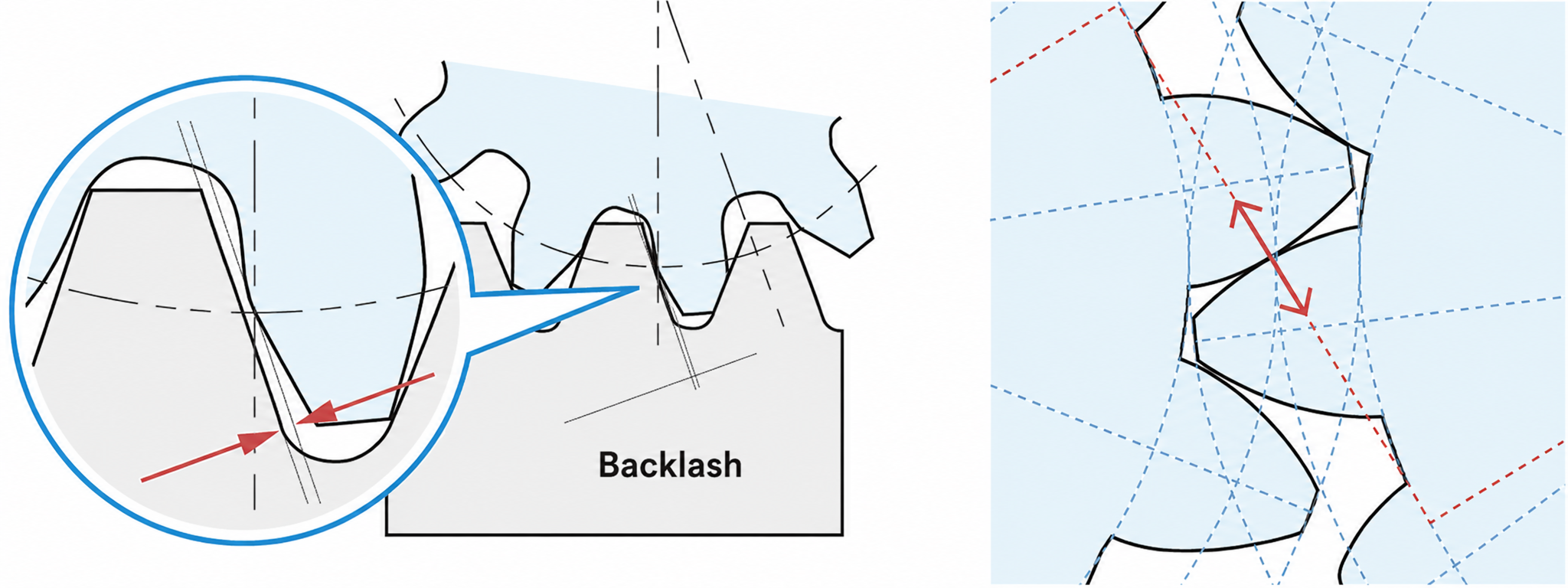
Combining a high-performance rack with a straight arrangement of cycloidal teeth, or a high-performance ring gear with a curved arrangement, with a roller-pin pinion enables rotary-to-linear or rotary-to-rotary motion through fully rolling contact.
The backlash-free transmission provides high positioning accuracy with light, responsive movement.
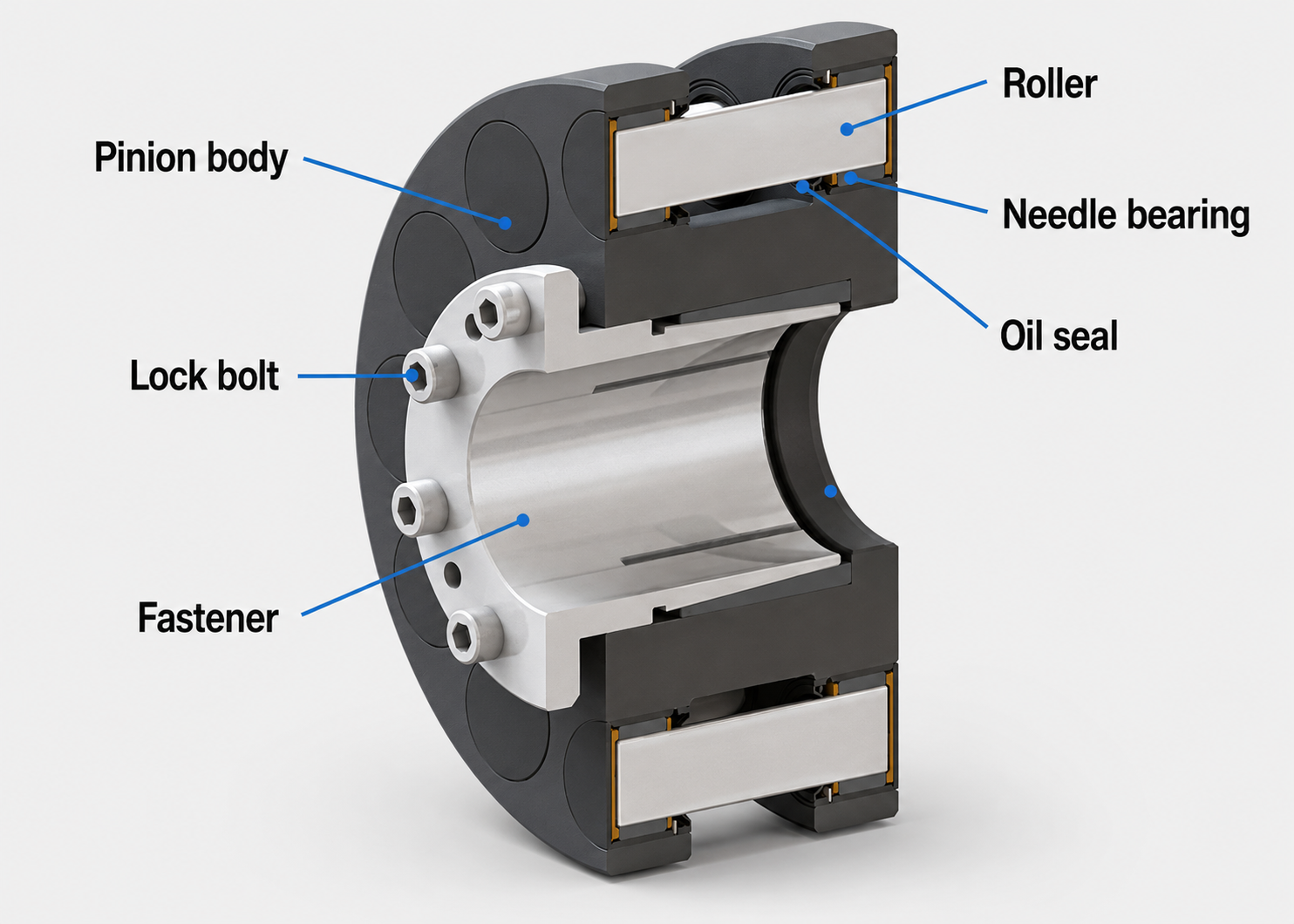
Each roller in the TCG roller pinion is supported at both ends by needle bearings for smooth and stable rolling motion.
The bearings are prepacked with grease, so routine customer greasing of the roller bearings is normally unnecessary.
The supplied locking element creates a friction connection between the pinion and shaft, preventing additional backlash at the joint.
The roller pinion remains in contact with the tooth profile at two or three points, preventing backlash in both forward and reverse motion.
Each roller can rotate independently. Preload can be applied by pressing the pinion appropriately against the rack or ring gear, allowing smooth operation even with no clearance.
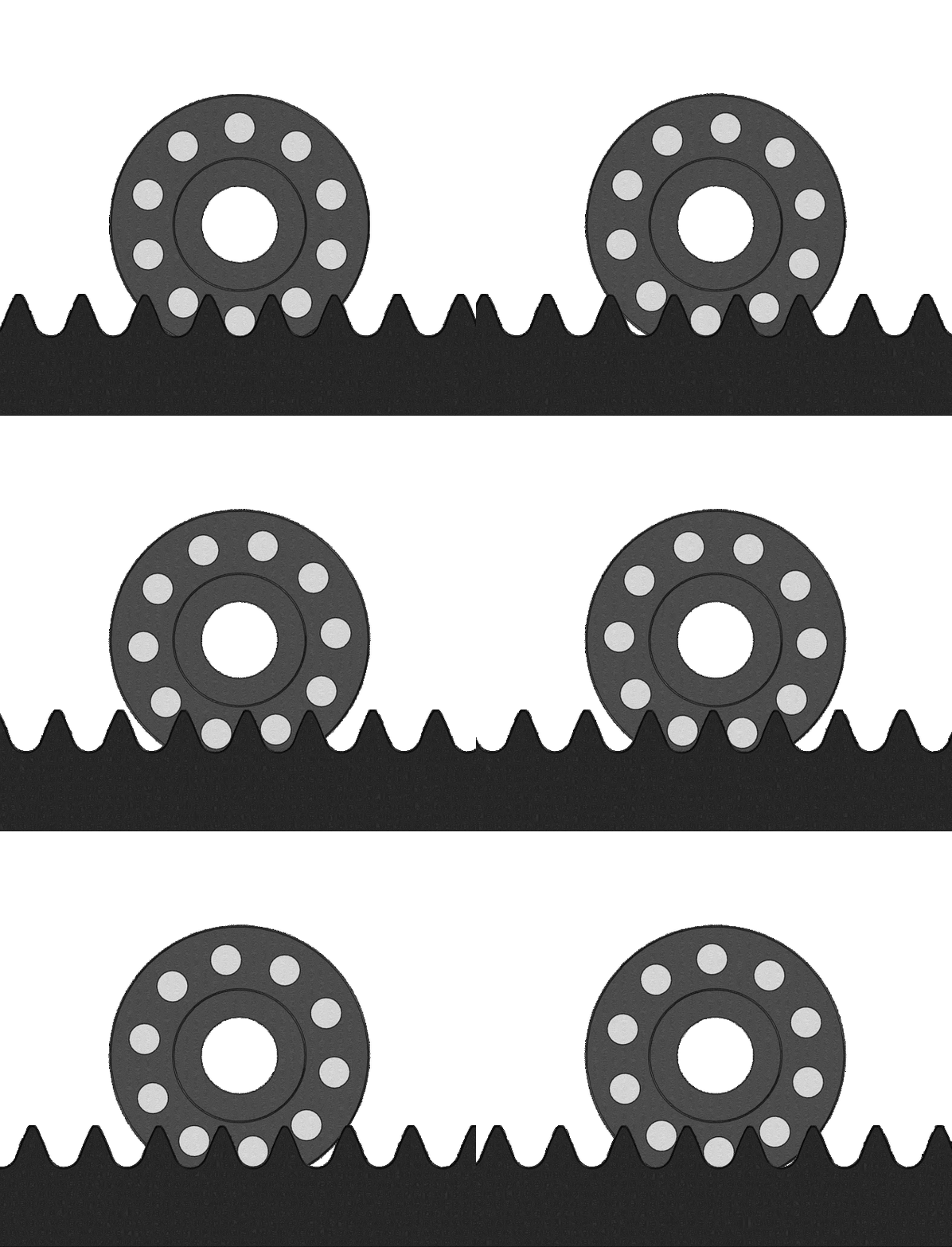
A rolling circle creates a cycloidal path.
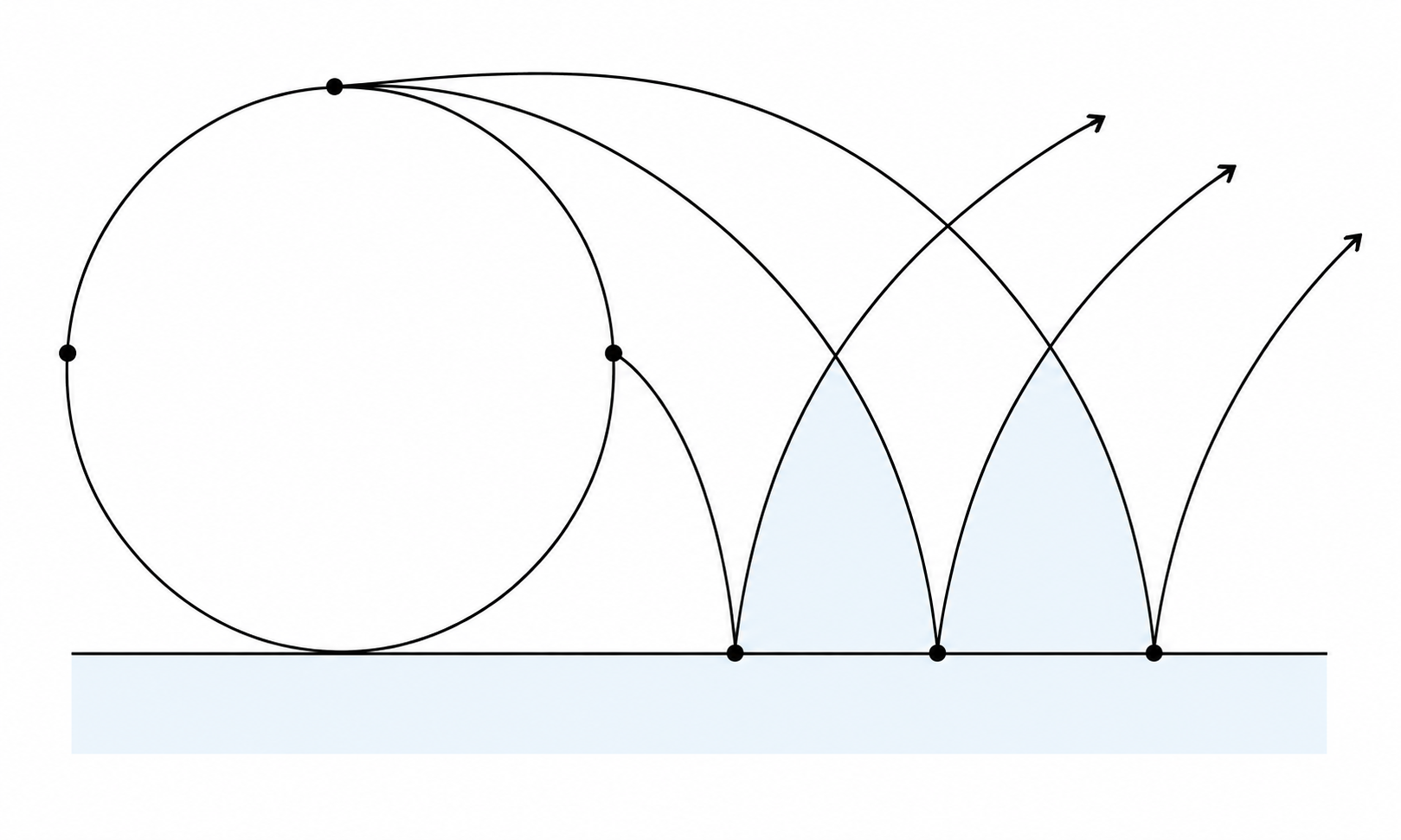
Repeated path points form a continuous theoretical profile.
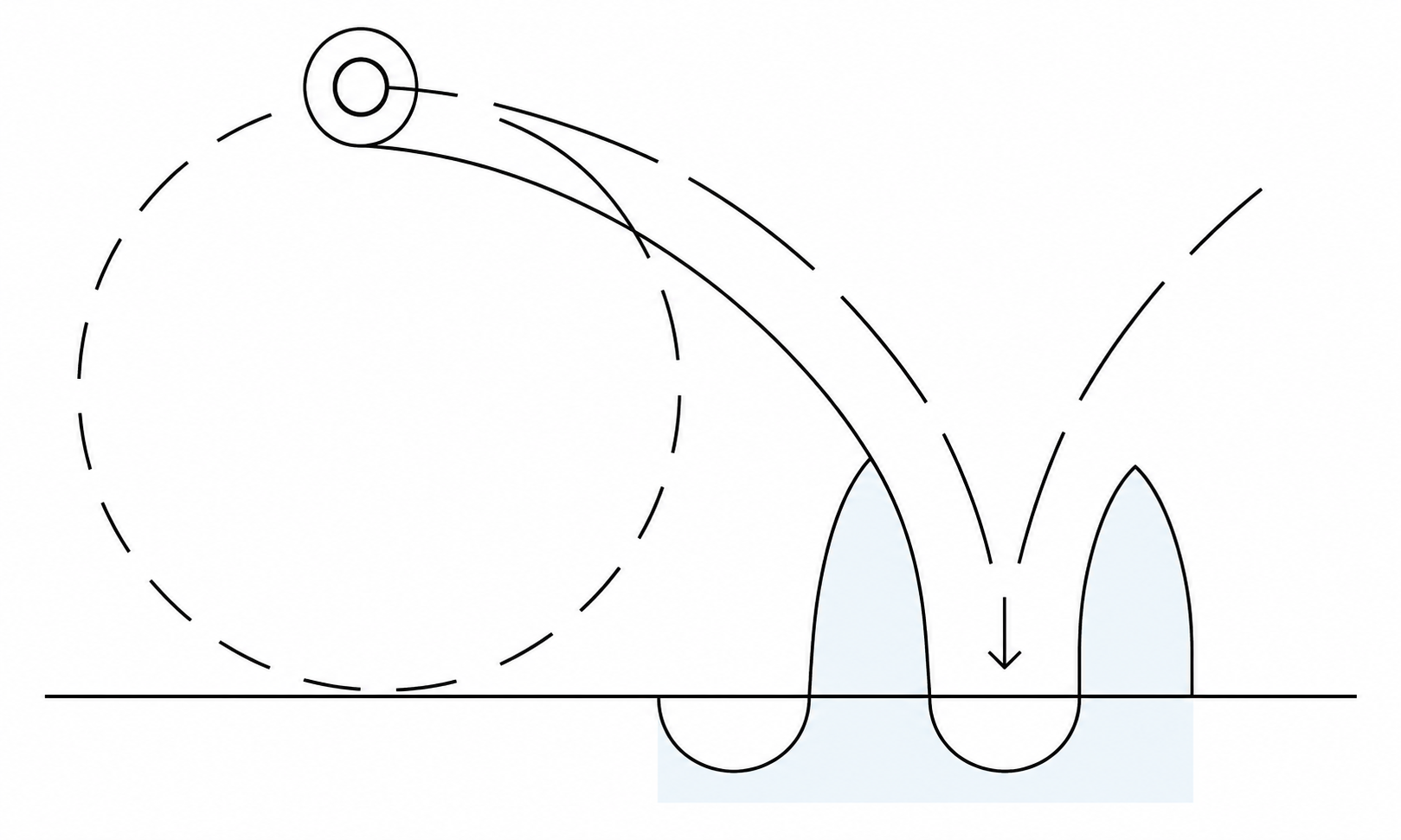
Replacing the points with roller pins creates the TCG engagement profile.
Bearing-supported rollers roll smoothly on the cycloidal tooth surfaces, so there is no harsh tooth-impact or transmission noise, and vibration is reduced.
Smooth rolling contact and low relative sliding reduce frictional wear and particle generation.
Combined with the TCG TLS lubrication supply system, routine oiling can be eliminated and maintenance requirements reduced.

Feed accuracy (rotary-to-linear ratio) and positioning accuracy can reach precision ball-screw levels, approximately C5~C7. The backlash-free precision motion of TCG is suitable for high-accuracy applications such as robots, loading equipment, and machining equipment.
| Item / Model | 1010~4012 | |
|---|---|---|
| Precision | Standard | |
| Transmission accuracy (Note 1) μm | ±30 | ±50 |
| Repeat positioning accuracy (Note 1) μm | 10 | 20 |
Note 1: Values are based on the installation conditions and assembly state specified by our company and a measurement temperature of 20℃. Installation structure, installation accuracy, temperature, and other factors may affect actual accuracy.
The rack can be extended for long travel using a dedicated connection method and is suitable for high-speed linear drives. Actual capability should be confirmed according to the model, installation accuracy, load, and operating environment.
Precision-machined segmented ring gears can be used at the required angle or combined into large-diameter hollow ring drives, making them suitable for large rotary platforms and special equipment.